

 Български
 Ελληνικά
 Polski
 Português
 Română


Introduction – Equality Also Means Economic Power
Equality goes beyond representation in classrooms or leadership positions. It also means independence — and economic power plays a central role.
For young women entering STEM or business careers, financial literacy becomes a key to freedom. Knowing how to negotiate salaries, manage resources, and plan for the future helps build confidence, resilience, and autonomy.
The 4equality project supports young women in breaking barriers in male-dominated sectors. Financial empowerment stands among the strongest tools to ensure that equality becomes a lived reality.
Economic equality affects everyday life: where someone can live, what opportunities they can access, how secure their future feels, and how freely they can make choices. When young women gain financial knowledge early, they gain more than numbers and budgets — they gain agency.

Figure 1. Young woman analysing financial charts. Credit: Dreamstime (free image).
The Gender Wealth Gap: More Than Just Pay
Many people are familiar with the gender pay gap, yet pay inequality represents only the beginning.
In the European Union, women earn around 13% less per hour than men (European Commission, 2023). Over time, this gap expands into a wider wealth gap.
When women earn less, saving becomes harder. Lower savings reduce investment opportunities, and long-term financial security becomes more difficult to achieve.
Beyond wages, wealth is built through assets, savings, and long-term investments. When women experience lower earnings, they often have fewer opportunities to accumulate wealth over time. This affects their ability to buy property, start businesses, or create financial safety nets.
The pension gap highlights this reality even further. Across the EU, women’s pensions remain significantly lower, partly because of career breaks linked to caregiving and part-time work. This creates greater vulnerability later in life, when financial independence becomes essential.
Women also carry more unpaid caregiving responsibilities, which strengthens the cycle of economic inequality. These structural realities mean that financial inequality becomes cumulative: a small gap early in life often becomes a much larger gap over decades.
Closing the gender wealth gap therefore requires more than fair salaries. It calls for stronger access to financial education, equal career progression, and systems that recognise unpaid care work. Empowering young women early with financial skills helps ensure that economic equality becomes achievable across the lifespan.
Why Young Women Often Feel Less Confident with Money
Financial confidence develops through learning and experience.
Girls often receive fewer opportunities to discuss money, take financial risks, or imagine themselves as future entrepreneurs or investors.
Just as imposter syndrome affects women in STEM, financial insecurity often grows from stereotypes that leadership, ambition, and negotiation belong mainly to men.
From an early age, cultural expectations shape behaviour:
- boys are encouraged to take risks
- girls are encouraged to stay cautious
- men are expected to lead financially
- women are expected to adapt
These subtle messages influence the choices young women make, even when they have the skills and ambition to aim higher.
Gender bias shapes career choices and financial choices alike. It influences whether young women apply for leadership roles, negotiate contracts, invest in their own ideas, or believe they deserve economic success.
Financial literacy helps replace uncertainty with clarity — and self-doubt with confidence.
Financial Literacy as an Empowerment Skill
Financial literacy focuses on having options and control over one’s future.
It supports young women in understanding their worth, recognising their rights, and building stability.
Key empowerment skills include:
- salary negotiation
- understanding contracts and workplace protections
- budgeting for independence
- investing in long-term security
These skills strengthen equality in everyday life.
Financial literacy also supports emotional wellbeing. When someone understands their finances, they experience more stability, less stress, and more freedom to make decisions based on goals rather than fear.
For young women navigating male-dominated environments, financial knowledge becomes part of professional strength. It helps them enter workplaces prepared, informed, and confident in what they deserve.
What Young Women Can Do Today – Small Steps, Real Power
Financial empowerment does not require having all the answers. It starts with small actions that build confidence over time.
If you are a young woman beginning your path in STEM, business, or entrepreneurship, these steps can help you take control of your financial future:
- Learn the basics early
Take time to understand budgeting, saving, and how salaries work. Even one short course or workshop can make a difference.
- Talk about money openly
Money should never feel like a taboo topic. Discussing pay, contracts, and financial goals helps break the silence that often keeps women under-informed.
- Practice salary negotiation
Negotiation is a professional skill. Preparing a few clear sentences about your value can help you enter job interviews with confidence.
- Find mentors and role models
Look for women who have built careers or businesses in your field. Their experience can guide you, inspire you, and remind you that success is possible.
- Believe that financial independence is part of equality
Economic confidence supports personal freedom. Every financial skill you gain strengthens your ability to make choices on your own terms.
Empowerment grows through knowledge, practice, and support. Each step forward helps close the wealth gap — not only for you, but for the generations that follow.
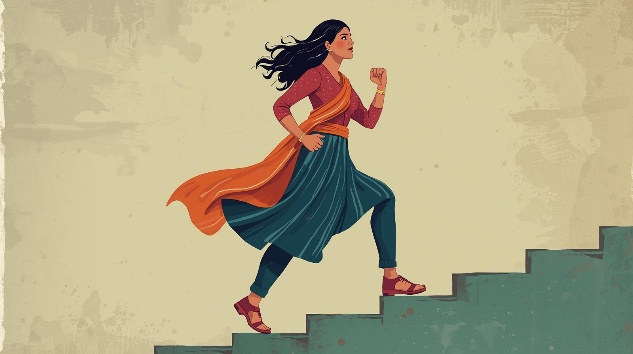
Figure 2. Illustration representing young women taking confident steps toward empowerment and economic freedom. Source: Canva design elements
Entrepreneurship and Equality
Women represent only 33% of entrepreneurs in Europe (Eurostat, 2022). This reflects barriers in access, mentorship, and encouragement.
Entrepreneurship offers young women an opportunity to build leadership on their own terms. It allows women to create workplaces that reflect inclusion, fairness, and innovation.
When young women gain financial confidence, entrepreneurship becomes a pathway to leadership. It allows women to participate fully in the economy and reshape it.
Economic empowerment also fuels social change. Women-led businesses often reinvest in communities, support inclusive hiring, and contribute to sustainable development.
Financial literacy gives young women the tools to transform ideas into action — and ambition into real impact.

Figure 3. Young women learning and collaborating. Credit: Pexels (Shkraba Anthony)
The Role of Youth Workers and Mentors
Youth workers play a key role in making economic empowerment visible and achievable.
They can support young women by:
- organising workshops on salary negotiation
- inviting women entrepreneurs as role models
- combining STEM training with financial skills
- creating safe spaces where young women can speak openly about money
Mentorship builds resilience both professionally and economically.
Youth workers often become the bridge between potential and opportunity. A single mentor can change how a young woman sees her future — and how boldly she steps into it.
Projects like 4equality help youth workers access tools and strategies that strengthen young women’s readiness to face bias, build confidence, and claim their space in the economy.
Conclusion – Money Is Power, Knowledge Is Freedom
The gender wealth gap remains one of the most persistent forms of inequality.
By learning financial literacy, negotiation, and economic confidence, young women gain freedom, stability, and opportunity.
Financial empowerment supports young women in shaping careers, building independence, and making choices with confidence. It transforms equality from an abstract principle into a daily reality.
The 4equality project already builds tools for resilience, leadership, and bias resistance. Financial empowerment is a vital step toward a truly equal future.
When young women understand money, they understand power.
And when they gain power, they gain possibility.

Figure 4. Youth mentoring session with diverse young women. Credit: Freepik.
Bibliography
- European Commission – Gender Pay Gap Statistics: https://commission.europa.eu/strategy-and-policy/policies/justice-and-fundamental-rights/gender-equality/equal-pay/gender-pay-gap-situation-eu_en
- Eurostat – Women Entrepreneurs in Europe: https://ec.europa.eu/eurostat/statistics-explained/index.php?title=Women_in_business
- EIGE – Gender Pension Gap Report: https://eige.europa.eu/gender-statistics/dgs/indicator/wmidm_pay_gap_pens
- OECD – Financial Literacy and Inclusion: https://www.oecd.org/finance/financial-education/
- UN Women – Economic Empowerment: https://www.unwomen.org/en/what-we-do/economic-empowerment
McKinsey – Women in the Workplace Report: https://www.mckinsey.com/featured-insights/diversity-and-inclusion/women-in-the-workplace