

 Български
 Ελληνικά
 Polski
 Português
 Română


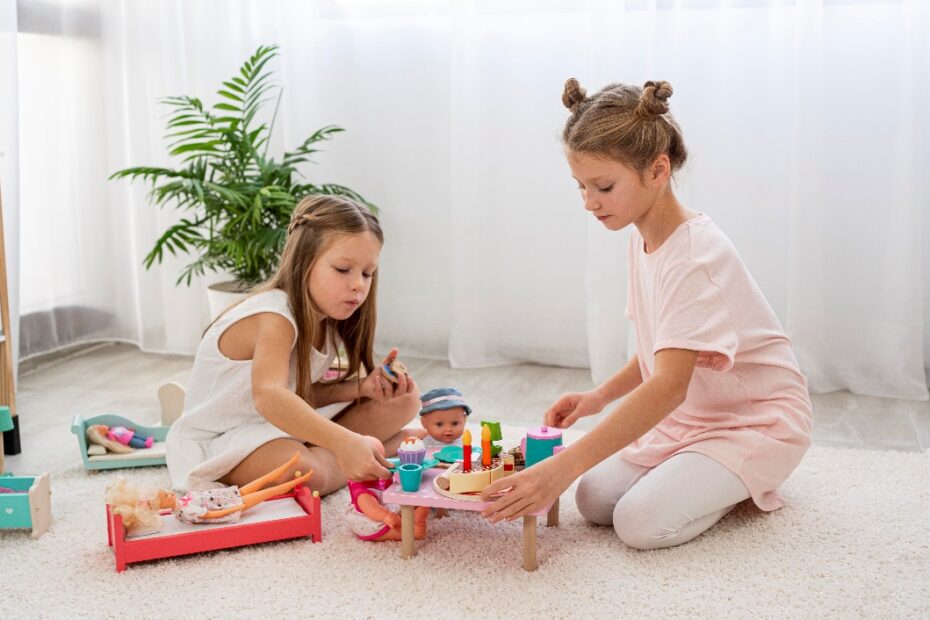
Play is considered a highly essential factor in children’s development. Toys tend to boost creative thinking, spark imagination, influence personality, and, most importantly, shape children’s perception of the surrounding world. Recent studies highlight that the choice of toys influences children’s views on gender roles as well as their future career choices. Moreover, subtle messages in advertisements affect children’s early assumptions about which toys are appropriate for them and which are not. As a result, they become interested in a limited range of toys.
Western countries have been actively taking many actions toward gender equality and women’s empowerment in sectors such as STEM and business. Nevertheless, inequalities and disproportions in many fields are still clearly visible. Women are underrepresented in certain sectors, while overrepresented in others. As the US Department of Labor reports, around 60-98% of all workers in fields such as health services, social work, education, and the service industry are women. In contrast, less than 30% of the workforce in STEM jobs is female [1].
The short history of the toy marketing
Sociologist Elizabeth Sweet, PhD, from San José State University has studied toy marketing across generations. Her research identified several crucial patterns. In the first half of the twentieth century, toy advertisements strongly emphasised gender differences. Toys were exclusively labelled either for boys or for girls. While toys for girls were limited to household items such as tea sets, boys were portrayed as future entrepreneurs.
After the end of the Second World War, the majority of women preferred to give up factory jobs and become housewives. It was not until the 1970s that the gender-neutral movement began. However, discriminatory patterns in marketing language reappeared in the 1980s.
At the same time, television sets and ultrasound technology became very common. Consequently, companies began marketing toys directly to children through television. Gender-specific attributes have persisted to this day. Blue and gender-neutral colours such as red, grey, green and yellow are widely used for boys’ toys, while pink and purple are considered exclusively ‘girl’ colours [1].

Source: Matt Chase / The Atlantic; CSA Images / Getty
The „Pinkification” movement
‘Pinkification’ refers to the process of making something pink or saturating it with pink. It is also a strategy adopted by toy companies to advertise products specifically to girls and women by colouring them pink or emphasising traditionally feminine traits.
Despite recent campaigns promoting gender equality, toys for girls are still predominantly pink. Research conducted by the Institution of Engineering and Technology (IET) found that STEM toys were three times more likely to be targeted at boys than at girls. In addition, an analysis of popular toy retailers’ websites revealed that 31% of STEM toys on offer were listed for boys, compared with just 11% for girls. A search using the terms ‘boys’ toys’ and ‘girls’ toys’ showed a ratio of nine to one, while 89% of toys listed for girls were pink, compared with only 1% of those listed for boys [2].
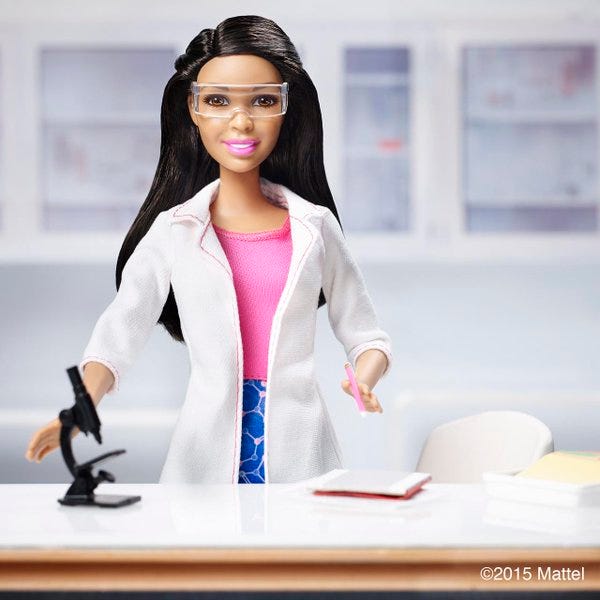
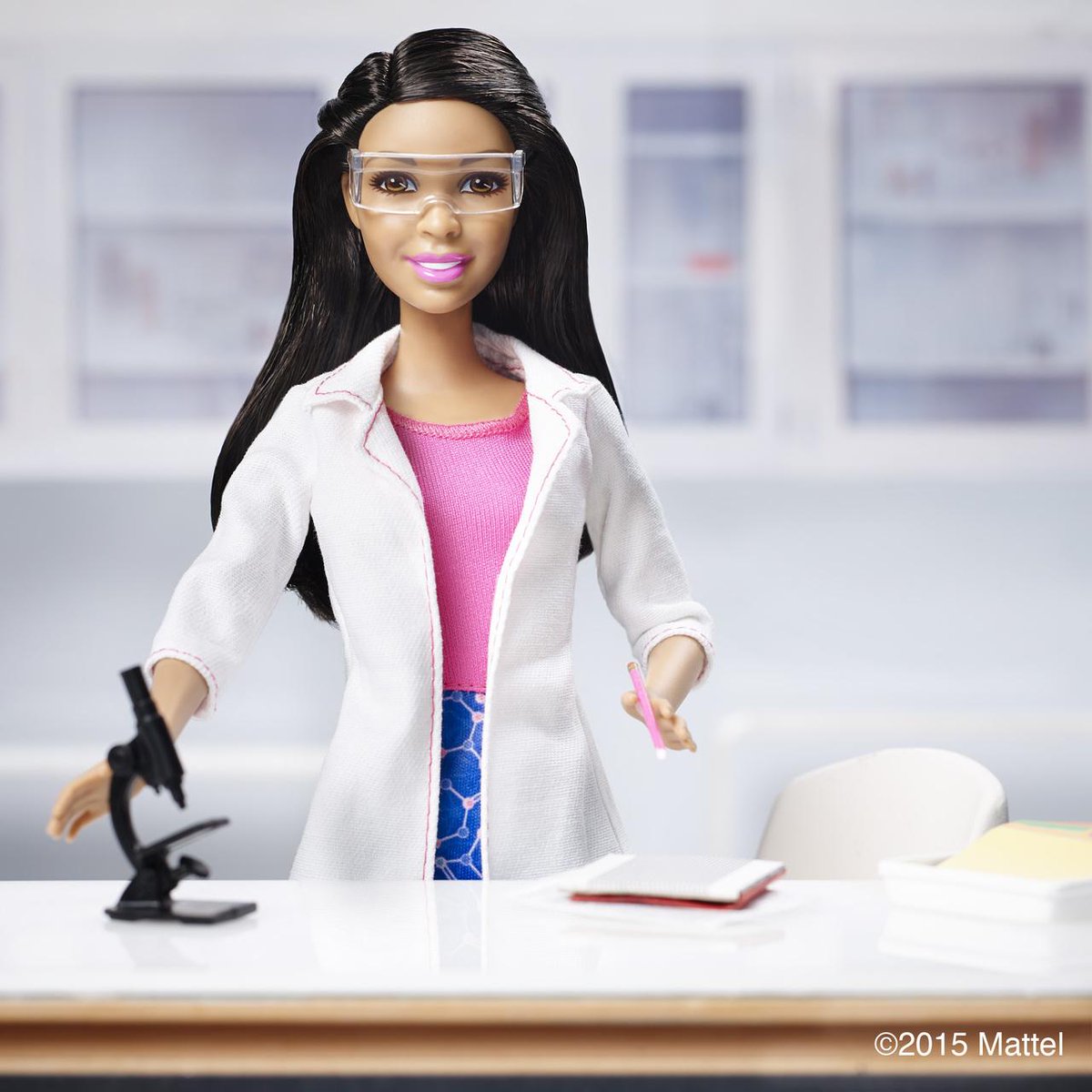
In a New York Times article, Claire Cain Miller encourages parents to purchase toys related to computer science and engineering for both girls and boys. She points out that the majority of dolls represent stereotypically feminine roles, while dolls depicting successful women in male-dominated professions remain scarce. Miller lists two different types of dolls that parents tend to buy for their daughters. ‘Sofia the First’, a Disney princess, has been one of the most popular toys during recent holiday seasons. In contrast, ‘Robot Girl Lottie’, inspired by women robotics experts, did not achieve similar popularity. Miller’s aim is to promote gender-neutral toys and dolls that portray successful careers rather than dolls that model fashion or embody the role of a princess [3].
Source: CC0NRDMUsAAVdxL.jpg
Toy design and skills acquisition
In 2017, a group of researchers found that by the age of six, girls have already internalised gender roles and differences – even before they start school [4]. This is by no means unrelated to the early selection of toys and the gender attributes assigned to them. As Becky Francis, Professor of Education at Roehampton University, explains: “Different types of toys give different messages about what’s appropriate for boys and girls to do, and have different educational content – both elements are important and might have a bearing on schooling and career choices later” [5].
Source: Freepik
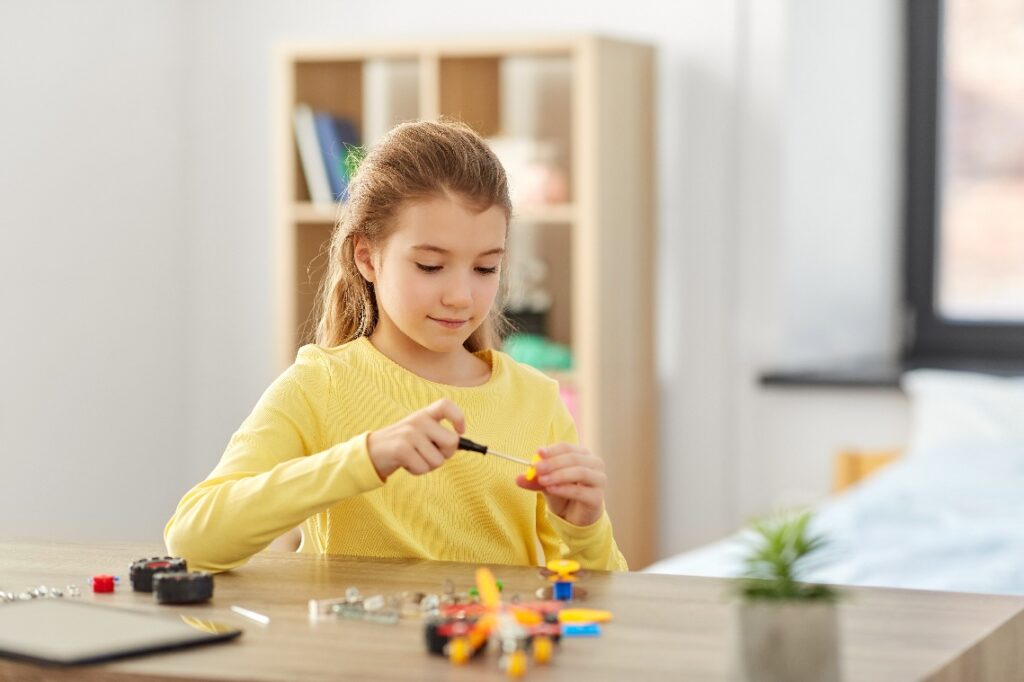
In her study, Francis found that boys are more often given toys related to action, construction and machinery, while girls are encouraged to adopt ‘feminine’ interests, such as hairdressing. Such trends contribute to the development of stronger problem-solving skills among boys and caring and nurturing dispositions among girls. Furthermore, stereotypical ‘boys’ toys’ appear to have higher educational value. As Francis notes: “Boys’ toys tend to contain didactic information, with technical instructions and fitting things together with Lego and Meccano, whereas girls’ toys tend to centre on imaginative and creative play, which develops different skills” [5].
From childhood play to professional pathways
Interviews conducted with women engineers and scientists further exposed the problem. When asked what toys they had played with as children, all respondents unanimously confirmed that they had played with construction or science-related toys; however, they did not recall being aware of a distinction between toys for boys and toys for girls.
It is not merely a matter of toys. If, at an early age, children are taught that certain activities or objects are intended exclusively for boys or girls, they may later apply this logic to their career choices [2]. Moreover, such messages can limit what girls are able to imagine people like themselves doing, as gender becomes an influential factor in shaping aspirations [6].
Dr Maggie Aderin-Pocock, a British-born space scientist of Nigerian descent, may serve as an illustrative example. She has stated that one of her teachers encouraged her to become a nurse; however, she pursued her ambition of working in space science and later obtained a PhD in mechanical engineering. In interviews, she emphasises that her parents allowed her to play with any toys she wished and did not segregate them according to gender. Her preferred toys included trains and Lego, which arguably contributed to the development of her cognitive skills [2].
Professor Blakemore’s study on the classification of toys
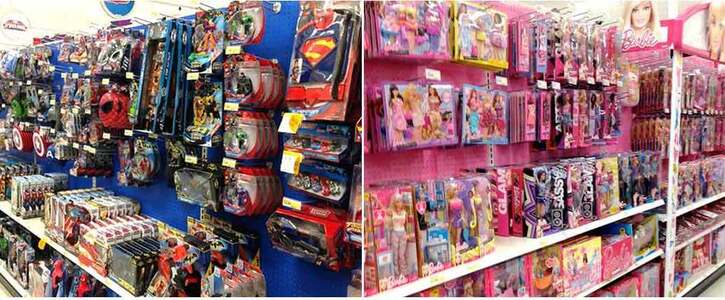
Judith Elaine Blakemore, Professor of Psychology and Associate Dean of Arts and Sciences for Faculty Development at Indiana University–Purdue University in Fort Wayne, conducted a study aimed at identifying more than 100 toys and determining the extent to which each toy was associated with boys, girls or neither. The findings of her study showed that toys associated with boys were closely related to aggression and fighting (for instance, wrestlers, soldiers and guns). In contrast, girls’ toys were associated with beauty and appearance (such as Barbie dolls, ballerina costumes, make-up and jewellery).
Blakemore concluded that girls’ toys promote physical attractiveness, nurturing and domestic skills, while boys’ toys tend to emphasise violence, competitiveness, excitement and, to some extent, danger. Moreover, toys assessed as highly educational and contributing to the development of children’s physical, cognitive and artistic skills were generally categorised as ‘neutral’ or ‘moderately masculine’ [7].
Source: 38Degrees
When asked what message families of young children should take from this research, Blakemore responded: “For parents, it’s the same message as for teachers: strongly gender-typed toys might encourage attributes that aren’t ones you actually want to foster. For girls, this would include a focus on attractiveness and appearance, perhaps leading to the message that this is the most important thing: to look pretty. For boys, the emphasis on violence and aggression (weapons, fighting and aggression) might be less than desirable in the long run” [8].
Another very important finding is that masculine toys tend to develop qualities such as spatial awareness, scientific thinking and building skills, which parents might wish to encourage in both boys and girls. Similarly, so-called feminine qualities, such as caring for infants or developing skills in cooking and housework, could also be encouraged in boys from an early age [8].
Towards more inclusive toy choices
The toy industry has been gradually changing and, over the years, more gender-neutral toys, such as science kits, have appeared on the market. Assuming that toys influence children’s future choices, parents should pay close attention to the selection of toys. This does not mean that they should start buying dolls for their sons and building blocks for their daughters. Children should not be forced to do anything against their will. While some girls enjoy playing with dolls, others prefer Lego and racing cars.
The most important aspect is to provide a variety of toys and allow children to explore and discover their interests and talents from an early age [1]. Undoubtedly, this simple approach could encourage girls to embrace new possibilities and demonstrate that they are just as capable as their male peers in STEM careers.

Source: Freepik
Referenes
[1] Silva, Vitor. “How the Choice of Toys Impacts the Future of Girls.” Built By Me ® – STEM Learning, June 10, 2022. https://www.builtbyme.com/choice-toys-future-girls/
[2] Weale, Sally. “Gendered Toys Could Deter Girls from Career in Engineering, Report Says.” The Guardian, December 8, 2016. https://www.theguardian.com/lifeandstyle/2016/dec/08/gendered-toys-deter-girls-from-career-engineering-technology
[3] Fayee, Miaa. “The Influence of Toys on Careers.” Medium, January 29, 2021. https://medium.com/@miaafayee/the-influence-of-toys-on-careers-660c990c86fb
[4] Bian, L., Leslie, S.-J., & Cimpian, A. (2017). Gender stereotypes about intellectual ability emerge early and influence children’s interests. Science, 355(6323), 389–391.
[5] Francis, Becky. “Gendered Toys Influence Children’s Career Choices.” The Guardian, December 26, 2014. https://www.theguardian.com/
[6] “Toys, play and career choices,” Let Toys Be Toys, November 24, 2013, https://www.lettoysbetoys.org.uk/toys-play-and-career-choices/
[7] “What the Research Says: Gender-Typed Toys,” National Association for the Education of Young Children (NAEYC), accessed March 2, 2026, https://www.naeyc.org/resources/topics/play/gender-typed-toys.